
How to Identify Fresh Fish Before Buying: A Complete Guide
Choosing fresh fish is an important part of preparing tasty seafood meals at home. Whether you are making traditional Tamil fish curry, spicy fish fry, or a simple fish gravy, the quality and handling of the fish can affect its flavour, texture, and safety.
For customers shopping at a seafood market or ordering fish online, knowing what to look for makes the buying process easier. This guide from ECR Fresh Mart explains how to identify fresh fish, what to check before buying, and how to handle fish safely after purchase.
Why Is It Important to Choose Fresh Fish?
Fish is a perishable food that requires careful handling and proper temperature control. When fish is not stored correctly, its quality can deteriorate quickly.
Choosing fish that has been handled and stored properly helps you prepare better meals and reduces the risk of foodborne illness. Appearance and smell can provide useful clues, but no single sign can guarantee that fish is safe to eat.
1. Check the Smell of the Fish
One of the first things to notice when buying fresh fish is its smell.
Fresh fish generally has a mild, fresh smell rather than a strong, sour, rancid, or ammonia-like odour.
What to look for:
-
A mild, fresh marine or watery smell, depending on the species.
-
No strong unpleasant or sour odour.
-
No ammonia-like smell.
If the fish has a strong unpleasant smell, avoid buying or consuming it. Do not taste fish to determine whether it is fresh.
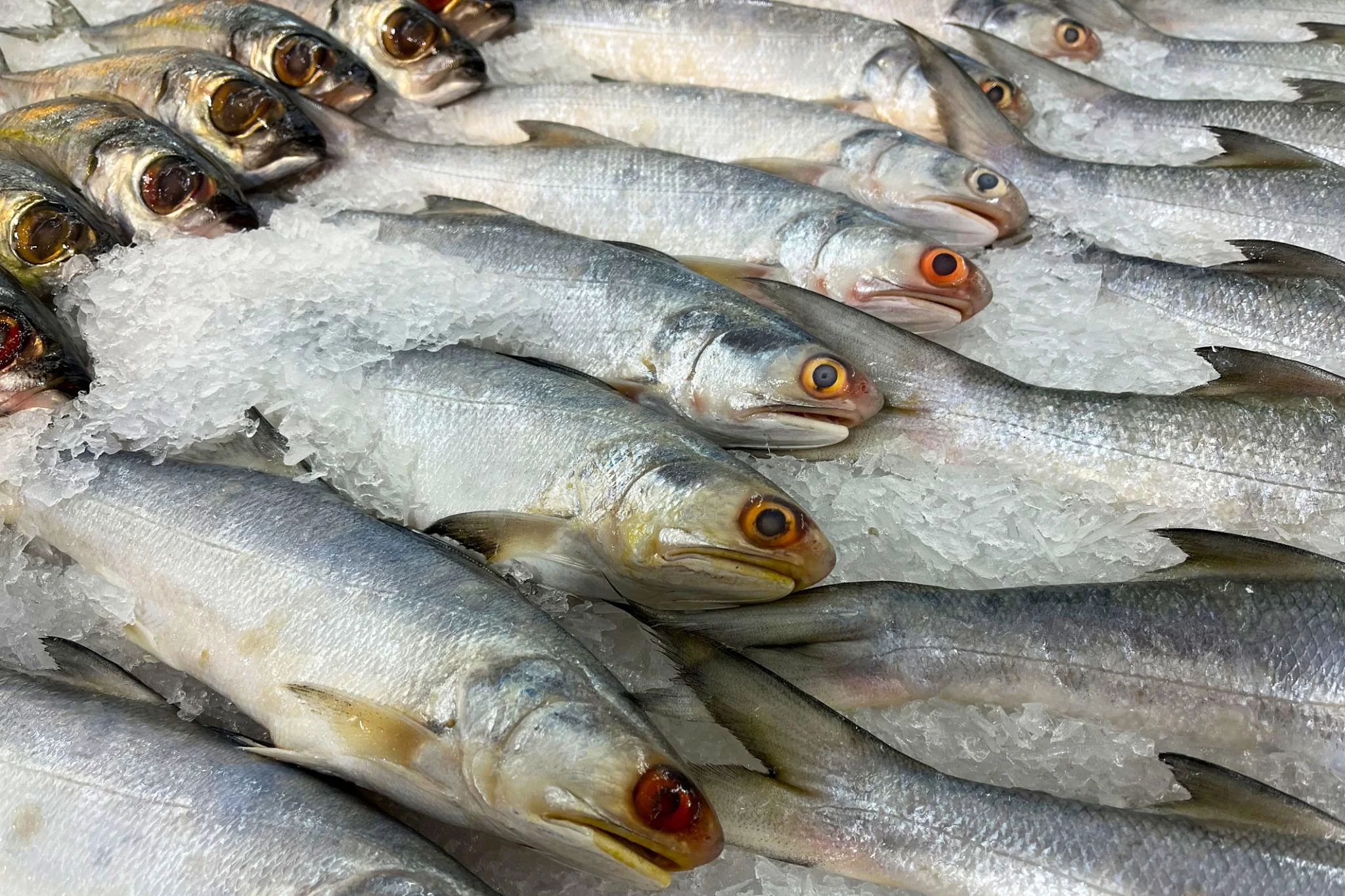
2. Look at the Eyes of Whole Fish
When buying whole fish, the eyes can provide one useful indication of quality.
Signs to check:
-
Eyes that are relatively clear and full are generally preferable.
-
Sunken, cloudy, or dull eyes can indicate deterioration, although the appearance varies by species and handling conditions.
Remember that clear eyes alone do not prove that fish is fresh or safe. Check other signs and how the fish has been stored as well.
3. Check the Texture of the Flesh
Texture is another useful factor when evaluating whole fish or fish portions.
Fresh fish flesh is generally firm and should not appear excessively soft or mushy. When gently pressed by a seller or handler, it often springs back rather than retaining a deep indentation.
Avoid fish with flesh that appears unusually mushy, breaking down, or slimy beyond the normal characteristics of that species.
For cut fish, look for pieces that maintain their shape and have no obvious signs of spoilage.
4. Examine the Skin and Scales
The skin and scales can offer additional clues when buying whole fish.
Look for:
-
Skin that appears reasonably moist and characteristic of the species.
-
Scales that are reasonably intact where scales are normally present.
-
No unusual discolouration or extensive tissue breakdown.
Not every fish has the same skin texture, scale pattern, or natural colour. Some species naturally have duller skin or different surface characteristics, so avoid judging freshness by colour alone.
5. Check the Gills When Possible
For whole fish, gills can provide another useful quality indicator.
Depending on the species and handling conditions, fresh fish often has gills that appear red or pink and moist. Brownish, greyish, slimy, or unpleasant-smelling gills may indicate deterioration.
Gills should be assessed alongside smell, texture, storage temperature, and other quality signs rather than used as the only test.
6. Make Sure the Fish Is Properly Chilled
Proper temperature control is essential for seafood quality and safety.
When buying fish, consider whether it is being kept cold and protected from excessive heat. Fish displayed on ice should be surrounded by sufficient ice, with meltwater managed appropriately.
If purchasing packed fish, check the packaging condition and follow the storage instructions. Avoid products with damaged packaging, signs of leakage, or evidence that the required cold storage has not been maintained.
Do not leave fish at room temperature for extended periods after purchasing it.
7. How to Identify Fresh Fish When Ordering Online
When ordering fish online, you may not be able to inspect the product before placing the order. In that situation, focus on the seller’s product information, ordering terms, handling practices, and delivery arrangements.
Before placing an order:
-
Check the product name: Confirm the fish variety and quantity you need.
-
Review the product details: Read the available description and check the listed unit or weight.
-
Confirm pre-booking requirements: Understand when and how your order needs to be placed.
-
Ask about cleaning: Check whether cleaning is available and whether extra charges apply.
-
Check delivery coverage: Confirm that your address is within the service area.
-
Inspect the delivery: When your order arrives, check the packaging, temperature, smell, and appearance before preparation.
A product photo or online description cannot independently guarantee freshness. Appropriate handling, cold storage, and prompt delivery are also important.
8. How to Store Fish Safely After Buying
Correct storage helps maintain fish quality and reduces food-safety risks.
Follow these basic practices:
-
Keep fish cold during transport and take it home promptly.
-
Refrigerate fish at 4°C or below if it will be used soon.
-
If you do not plan to use it within one to two days, freeze it promptly in suitable, well-sealed packaging.
-
Keep raw fish separate from ready-to-eat foods to avoid cross-contamination.
-
Wash your hands, utensils, and food-contact surfaces after handling raw seafood.
-
Cook fish thoroughly before serving.
Do not rely on cooking to make spoiled fish safe. If fish has an unusual unpleasant smell or other clear signs of spoilage, discard it.
9. Which Fish Should You Choose for Your Recipe?
Different fish varieties work well in different dishes. Your choice depends on the recipe, texture, availability, and personal preference.
-
Vanjaram Meen: Commonly chosen for fish fry, grilled preparations, and fish steaks.
-
Sankara Meen: Often used for fish curry and spicy fried dishes.
-
Ayila Meen: Popular in traditional coastal curries and masala preparations.
-
Mathi Meen: Frequently used in home-style curries and fried dishes.
-
Nethili Meen: A common choice for crispy small-fish fry.
Local fish names can refer to different species in different markets. Confirm the exact variety with the seller if species identification is important to your purchase.
10. Buy Fish with Confidence from ECR Fresh Mart
Planning to cook fish curry or prepare a spicy fish fry? ECR Fresh Mart helps customers explore available fish and seafood options for their meals.
Before ordering, please keep these requirements in mind:
-
Minimum order: 1 kg for applicable fish products.
-
Pre-booking: Orders require pre-booking.
-
Cleaning charges: ₹20 per kg for applicable fish and prawn cleaning services.
-
Prawn deveining: An additional ₹30 charge applies to the applicable deveining service; confirm the basis of the charge when ordering.
-
Weight adjustments: If the delivered fish or live country chicken weighs more than the quantity ordered, the additional amount is collected at delivery.
Delivery availability depends on the service area. Check the website or contact ECR Fresh Mart to confirm product availability, applicable charges, and delivery arrangements before placing your order.
Explore the available fish varieties and choose an option that suits your next home-cooked seafood meal.